

© 2026 Riot Games. All Rights Reserved.
© 2026 Riot Games. All Rights Reserved.
When we first introduced the next evolution of the VCT, we led with a simple idea: everything is a tournament.
Starting in 2027, VALORANT Esports will move away from long-form league play and into a more open, high-stakes tournament model designed to make every match matter. Cups will replace regular season play. Open Qualifiers will create more paths into the system. Partner teams will remain important, but performance will determine how far every team goes.
Today, we’re sharing more details on the competitive format behind VCT 2027, including how teams progress through the season, how qualification works for partner and open teams, and how the new structure creates more meaningful matches throughout the year.
We’re also introducing more information on the financial support available across the ecosystem, including fixed qualification payouts and new incentives designed to help open teams compete sustainably at the highest level.
From tournament formats and qualification paths to creator teams and competitive rewards, here’s a closer look at how VCT 2027 comes together.
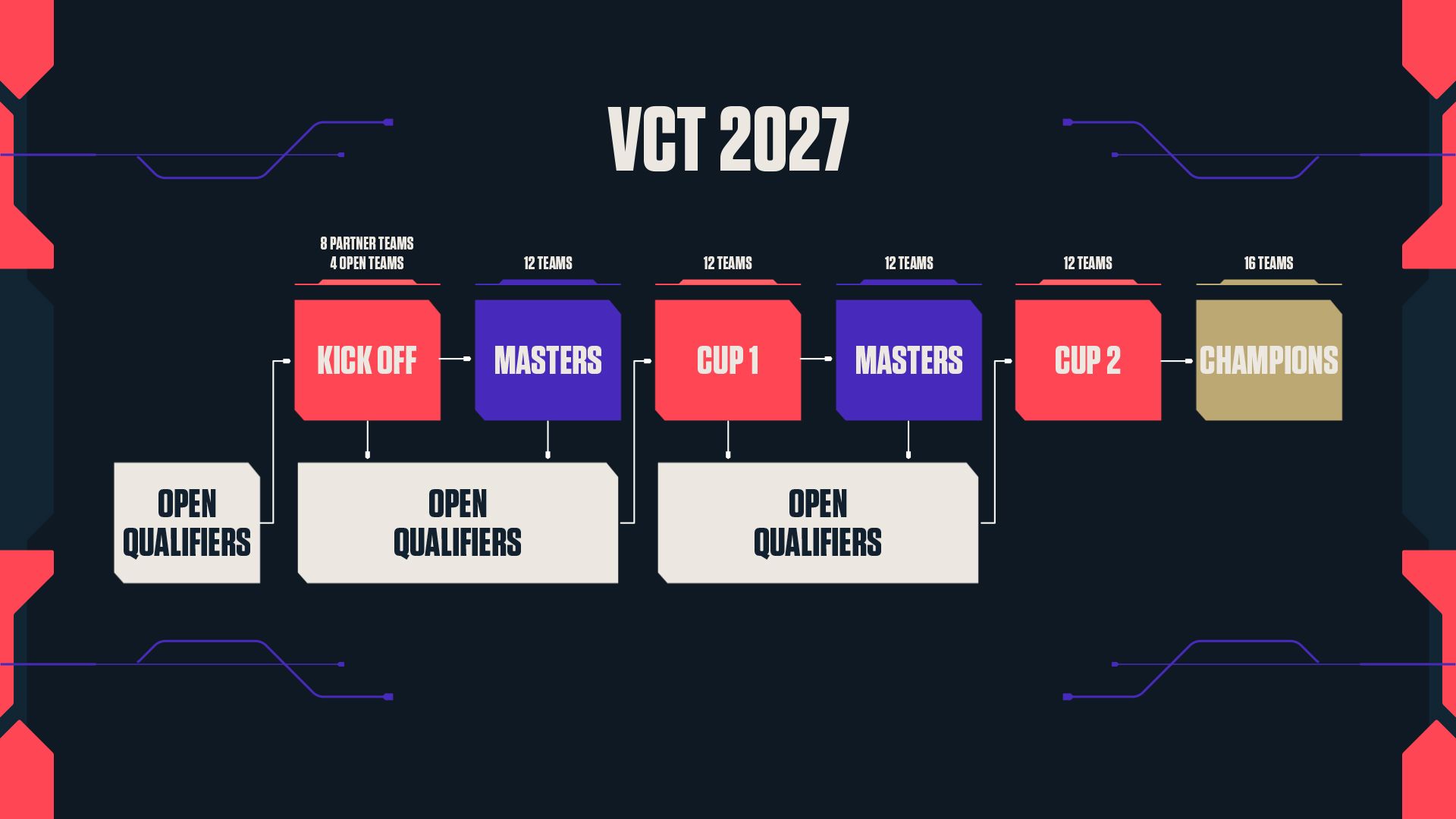
Kickoffs for VCT Americas, Pacific, and EMEA will feature 12 teams: 8 partner teams and 4 teams from Open Qualifiers.
We knew if this system was going to create impacts for open teams, they needed more than a single slot.
Eight partner teams gives us enough room to bring at least four open teams into every major event, while still keeping meaningful financial support and competitive opportunities for everyone involved.
At Kickoff, the top three teams from each territory will qualify for Masters. After that, qualification is based on performance.
Partner teams will have an initial advantage through direct entry into Kickoff, but they will not be automatically qualified into every Cup. Once the season begins, teams must keep earning their place.
Teams that place outside the top positions at a Cup or Masters will move down into Open Playoffs, where they will need to fight their way back. Teams with no previous results, or teams that perform poorly at the previous Opens will have to start at the beginning of the next Open Qualifiers.
VCT CN will follow a slightly different structure. Partner teams and visitor teams will receive direct entry into Kickoff and the first two Cups. Kickoff will feature 12 teams, and the field will consist of 8 partner teams, 2 visitor teams, and 2 teams from Open Qualifiers. The visitor team model will continue in VCT CN, providing an additional path for teams to remain in the ecosystem through promotion and relegation.
VCT Pacific will include a Last Chance Qualifier (LCQ), where the top teams from South Asia and Oceania can fight for qualification into Kickoff and Cups. This creates an additional competitive pathway into the VCT ecosystem and expands opportunities for teams across the broader Pacific region.
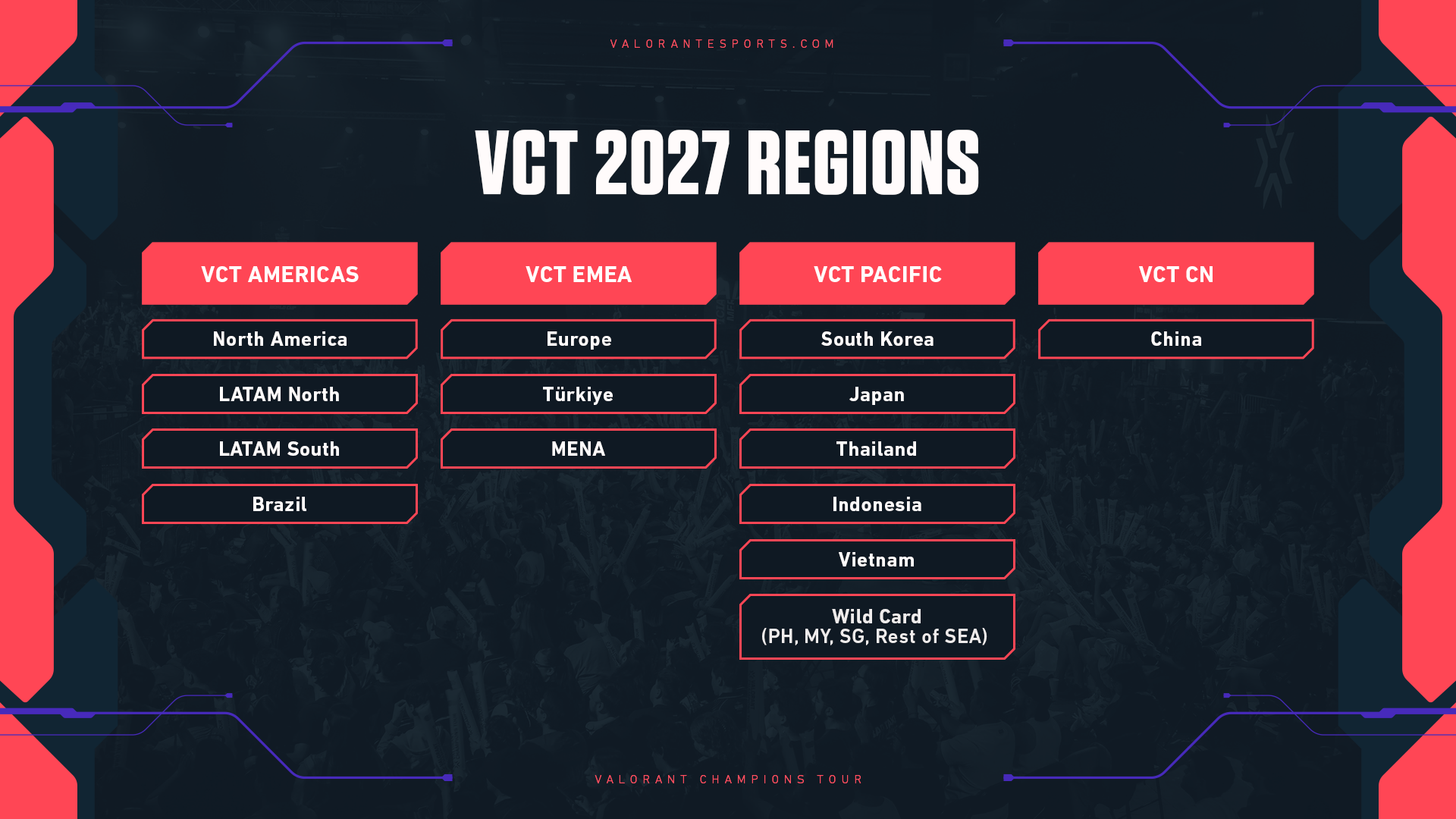
Open and creator-led teams can compete, qualify, and build toward larger events just like any other team. The key requirement is roster continuity. If a team keeps at least three out of five players, it keeps its points and progress.
That means open teams can build real competitive momentum over the course of the season, as long as the core roster remains intact.
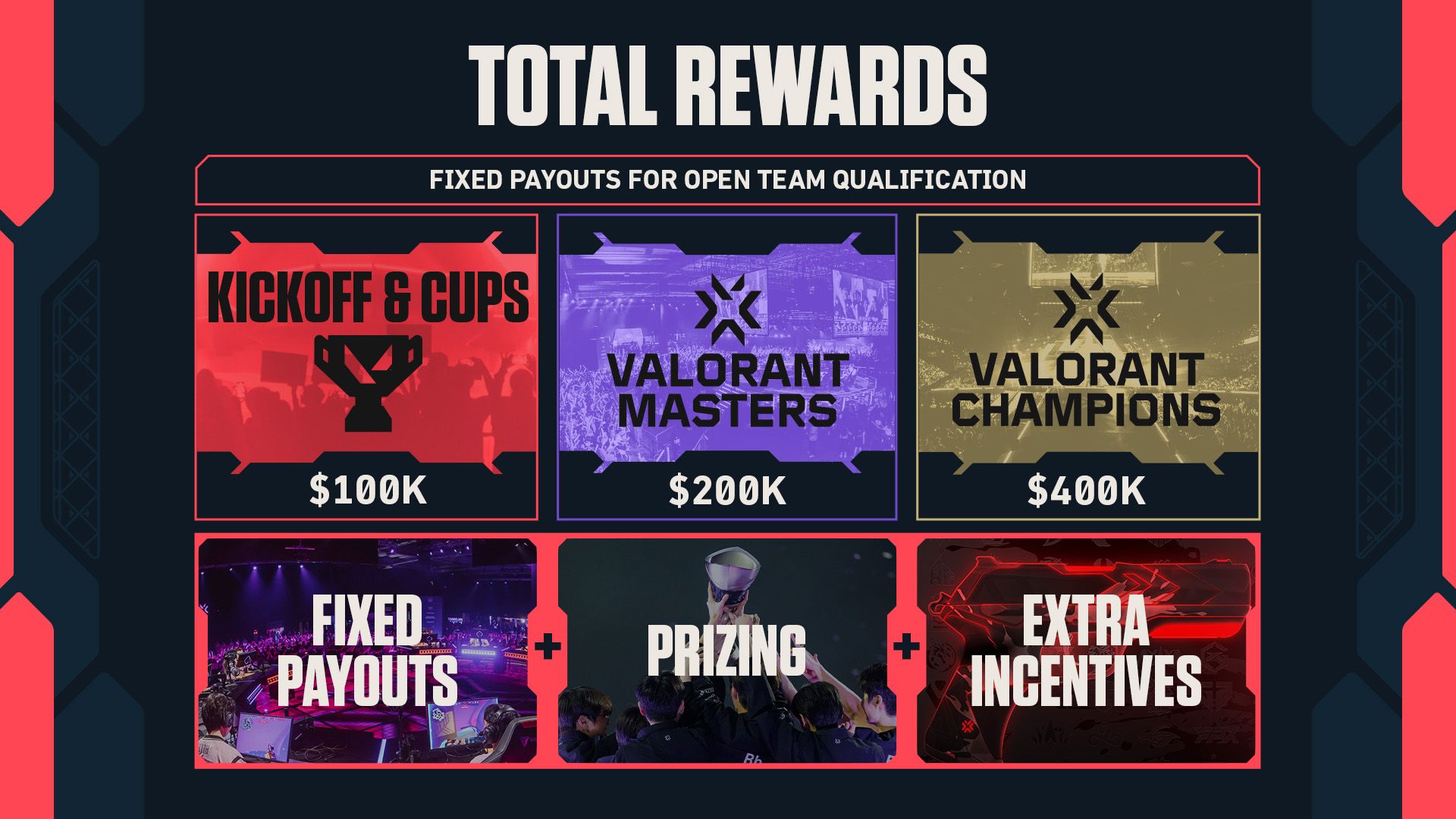
One of the biggest changes in 2027 is the move toward predictable financial support for open teams that qualify into major stages of the ecosystem.
For open teams that perform well, we are introducing fixed payments based on qualification:
These rewards are designed to provide real support at the moments teams need it most.
Additionally, open teams will also be eligible for prize pool earnings and additional incentives. For example, if a non-partner team qualifies for the Game Changers Championship, that team will receive an additional $100,000 incentive .
The goal is to create a system where strong performance can translate into meaningful support, regardless of partnership status.

The move to a more open competitive ecosystem doesn’t stop with VCT. As part of the 2027 transition, we’ve updated our Community Competition Guidelines to make it easier for organizers around the world to run VALORANT events, support local communities, and create more opportunities for competition. Read the full guidelines on valorantesports.com
The 2027 VCT structure is designed to make the sport more open, more competitive, and more connected to regional communities.
Partner teams will continue to play a critical role. Open teams will have more opportunities than ever before. Regional qualifiers will bring more meaningful competition to local scenes. Cups will create more live events in more cities.
The result is a VCT where teams can rise faster, fans can follow more meaningful matches, and global events are connected to a deeper competitive foundation.
Open teams can qualify for everything. Partner teams have to keep performing. Every match matters. And in 2027, everything is still a tournament.
